In [37]:
import numpy as np
import torch
from torch.utils import data
import torchvision
from torchvision import transforms
from d2l import torch as d2l
In [ ]:
# 感知机
# 就是一个线性分类器
# 二分类: -1或者1
# 多分类: 多个二分类的结合
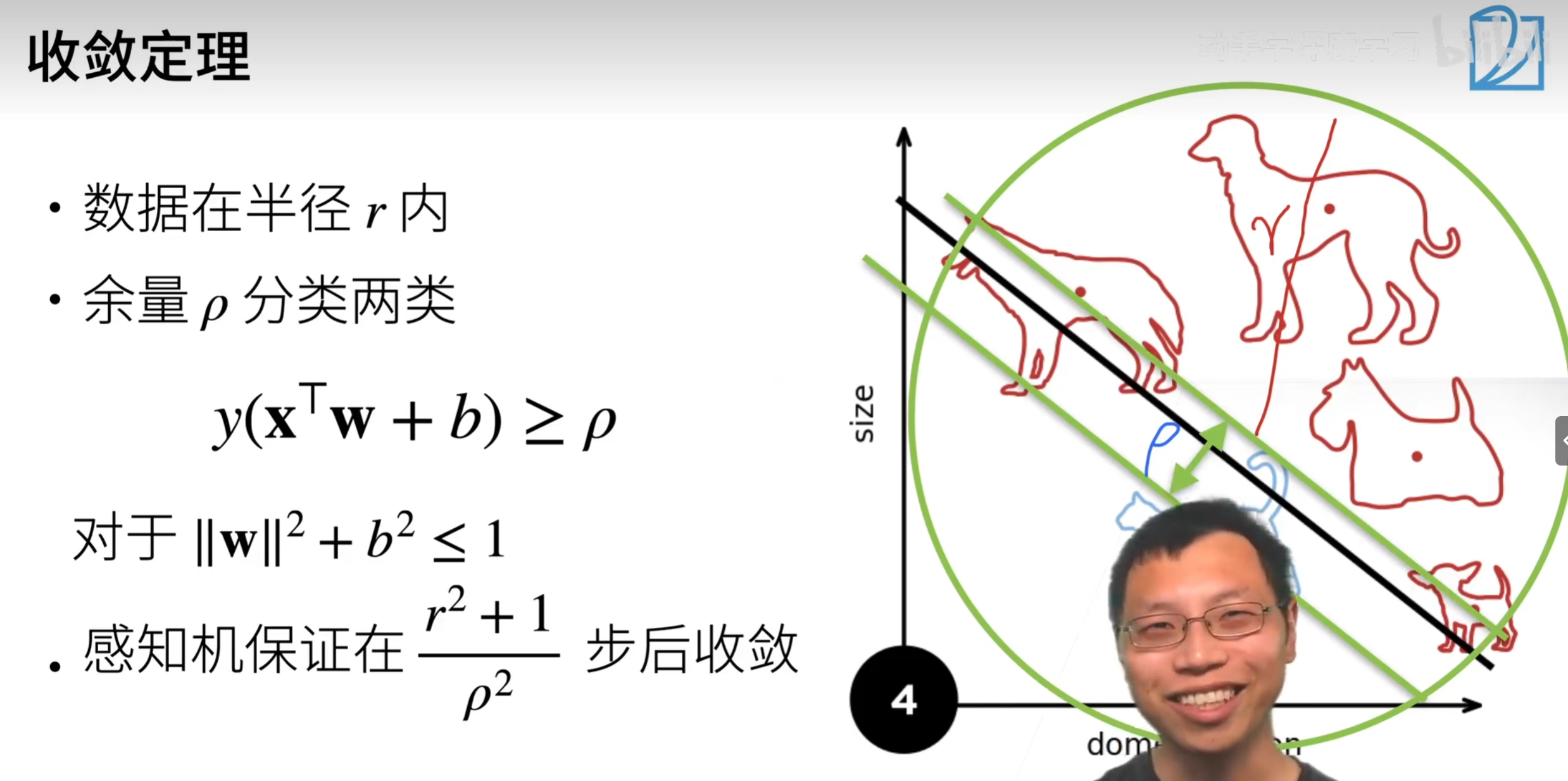
感知机收敛问题 [
](https://img2024.cnblogs.com/blog/3517150/202505/3517150-20250520231439442-176712619.png)
[
](https://img2024.cnblogs.com/blog/3517150/202505/3517150-20250520231439160-378259175.png)
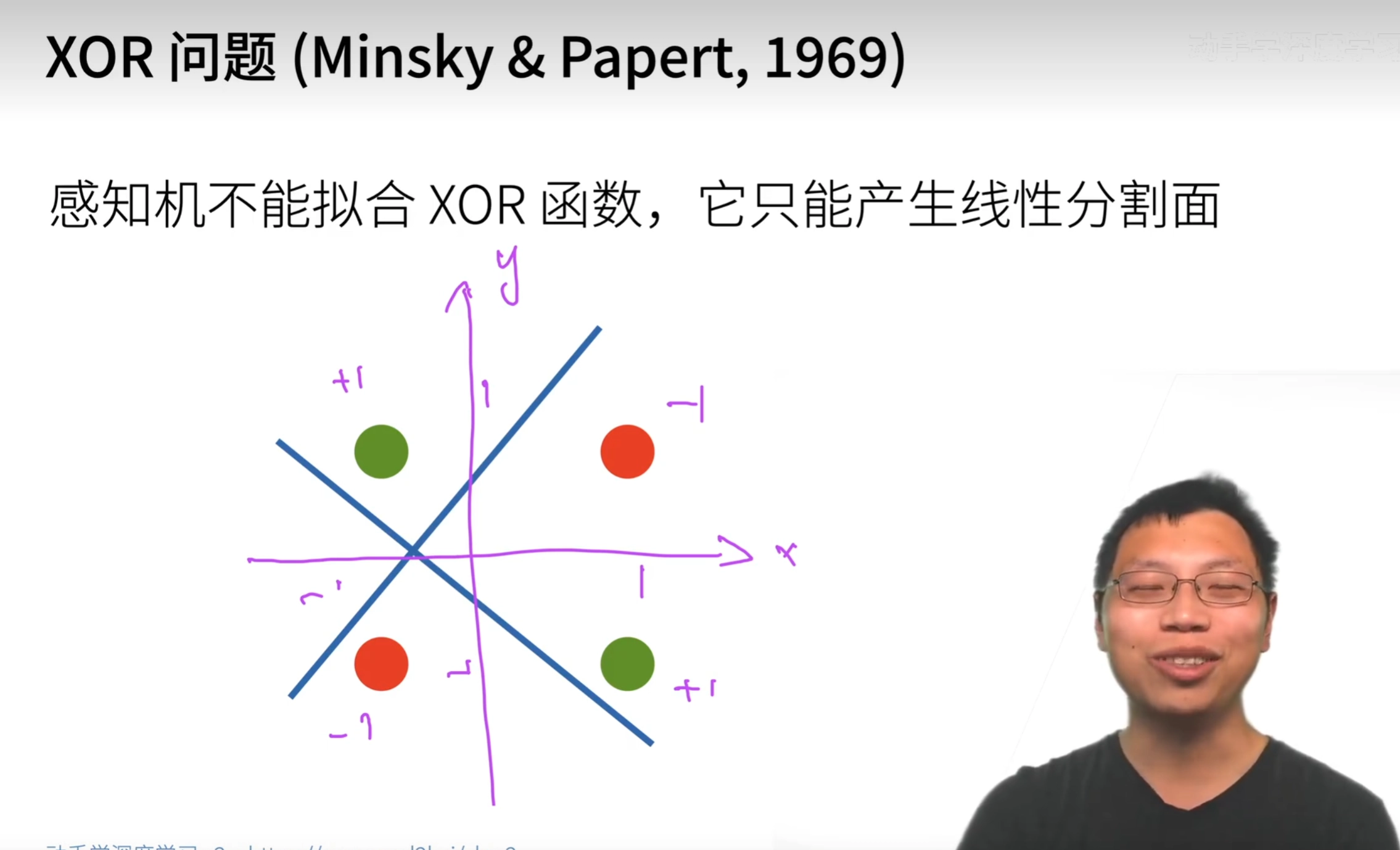
多层感知机
In [ ]:
# XOR就是算法里面的异或运算
# 异或运算符是指: 参与运算的两个值,如果两个相应位相同,则结果为0,否则为1。即:0^0=0, 1^0=1, 0^1=1, 1^1=0
# 线性模型有局限性,比如它假设特征与输出是线性关系,这在很多实际情况中不成立,如体温与死亡率的关系、图像分类问题等。为克服线性模型的限制,可在网络中加入隐藏层,将多个全连接层堆叠在一起,形成多层感知机
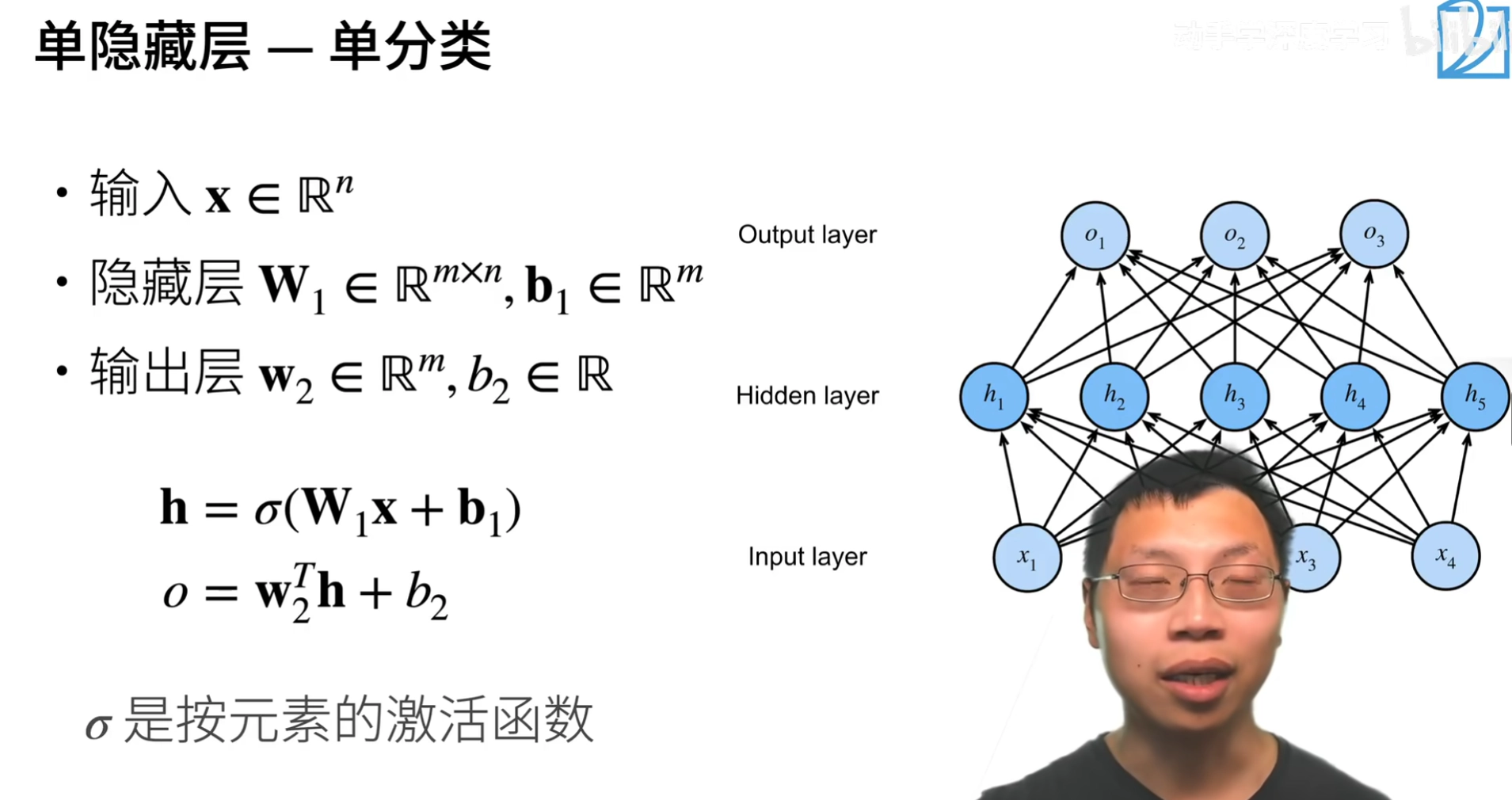
单隐藏层
[
](https://img2024.cnblogs.com/blog/3517150/202505/3517150-20250520231439116-1060894686.png)
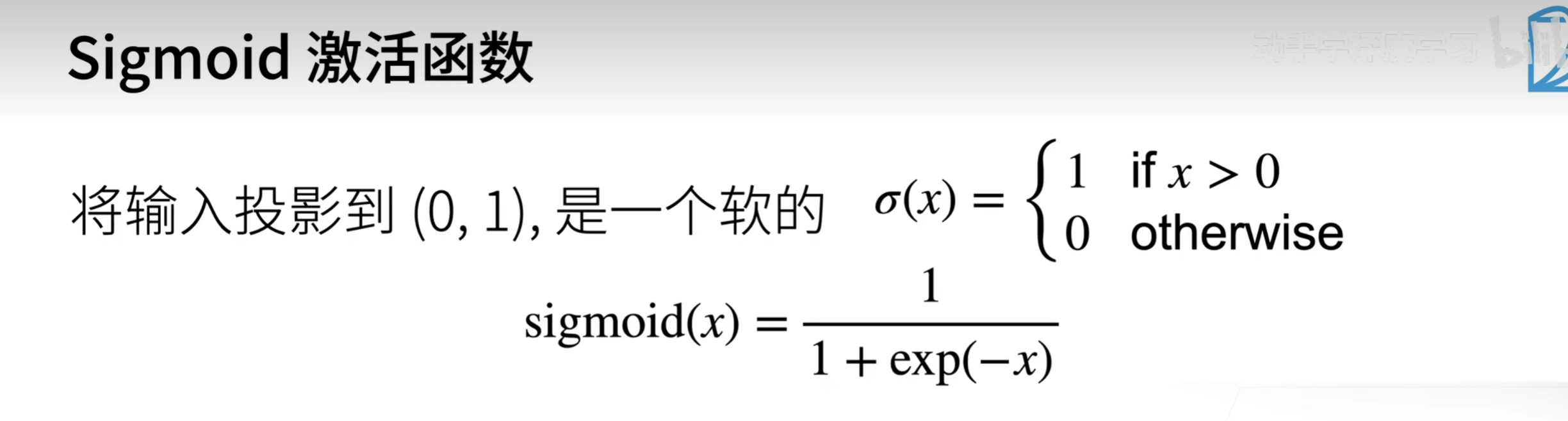
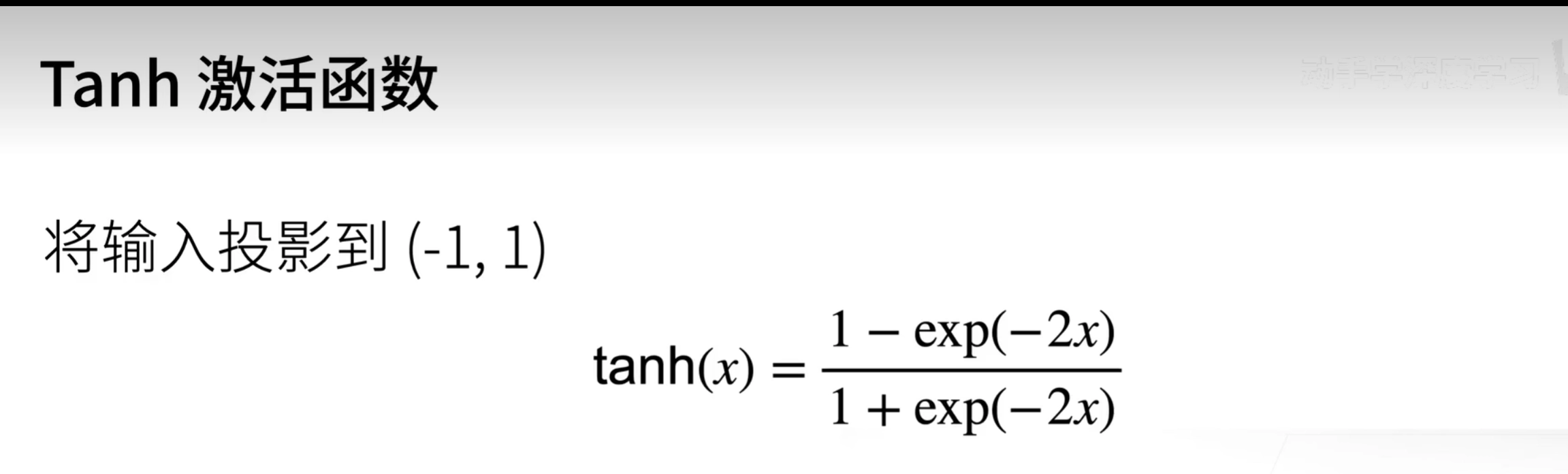
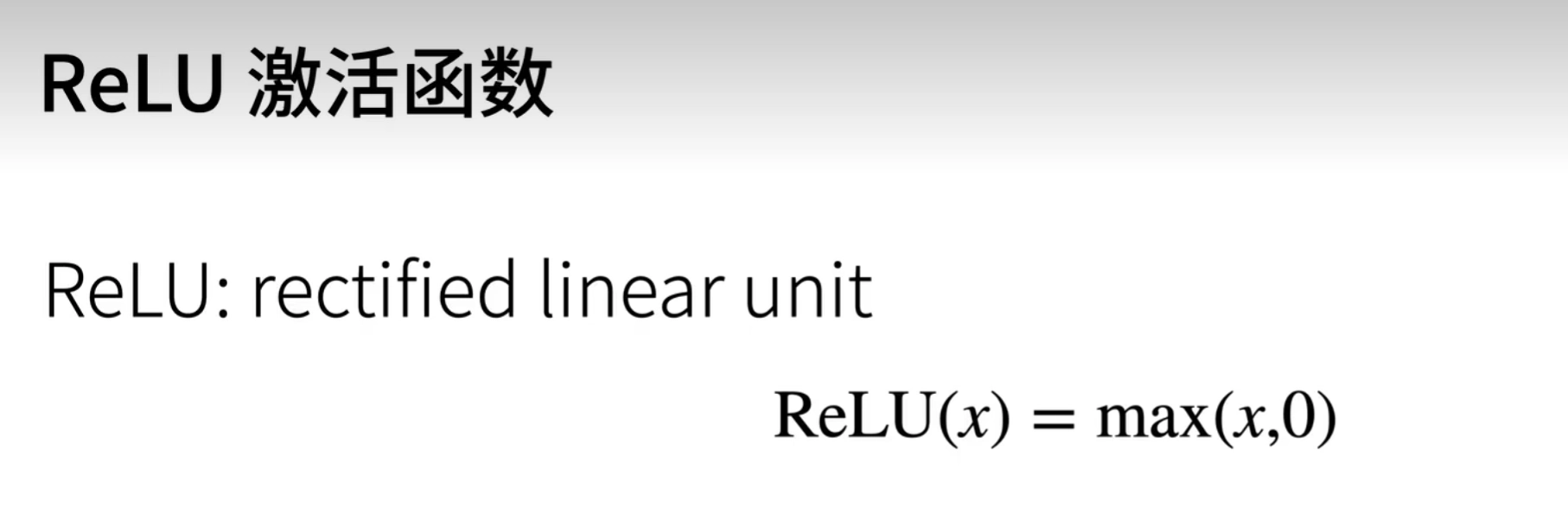
一堆激活函数
引入非线性:激活函数通过引入非线性,使得神经网络能够学习和表示复杂的模式和关系。如果没有激活函数,无论神经网络有多少层,它的表现力都相当于一个简单的线性模型。
增加模型的表达能力:通过使用不同的激活函数,神经网络可以更好地拟合训练数据,从而提高模型的准确性和泛化能力。
帮助缓解梯度消失问题:在深层神经网络中,反向传播时的梯度可能会变得非常小,导致难以训练。一些激活函数(如ReLU及其变体)有助于缓解这个问题。
加快训练速度:选择合适的激活函数可以加快神经网络的训练速度。例如,ReLU函数在正区间内斜率为1,能够有效加速训练过程。
保持数据的分布:某些激活函数(如tanh和sigmoid)可以将输入数据压缩到有限的范围内,有助于保持数据的分布,避免数值过大导致的计算不稳定。 [
](https://img2024.cnblogs.com/blog/3517150/202505/3517150-20250520231438925-233407951.png)
[
](https://img2024.cnblogs.com/blog/3517150/202505/3517150-20250520231438787-960874160.png) [
](https://img2024.cnblogs.com/blog/3517150/202505/3517150-20250520231438925-1554478135.png)
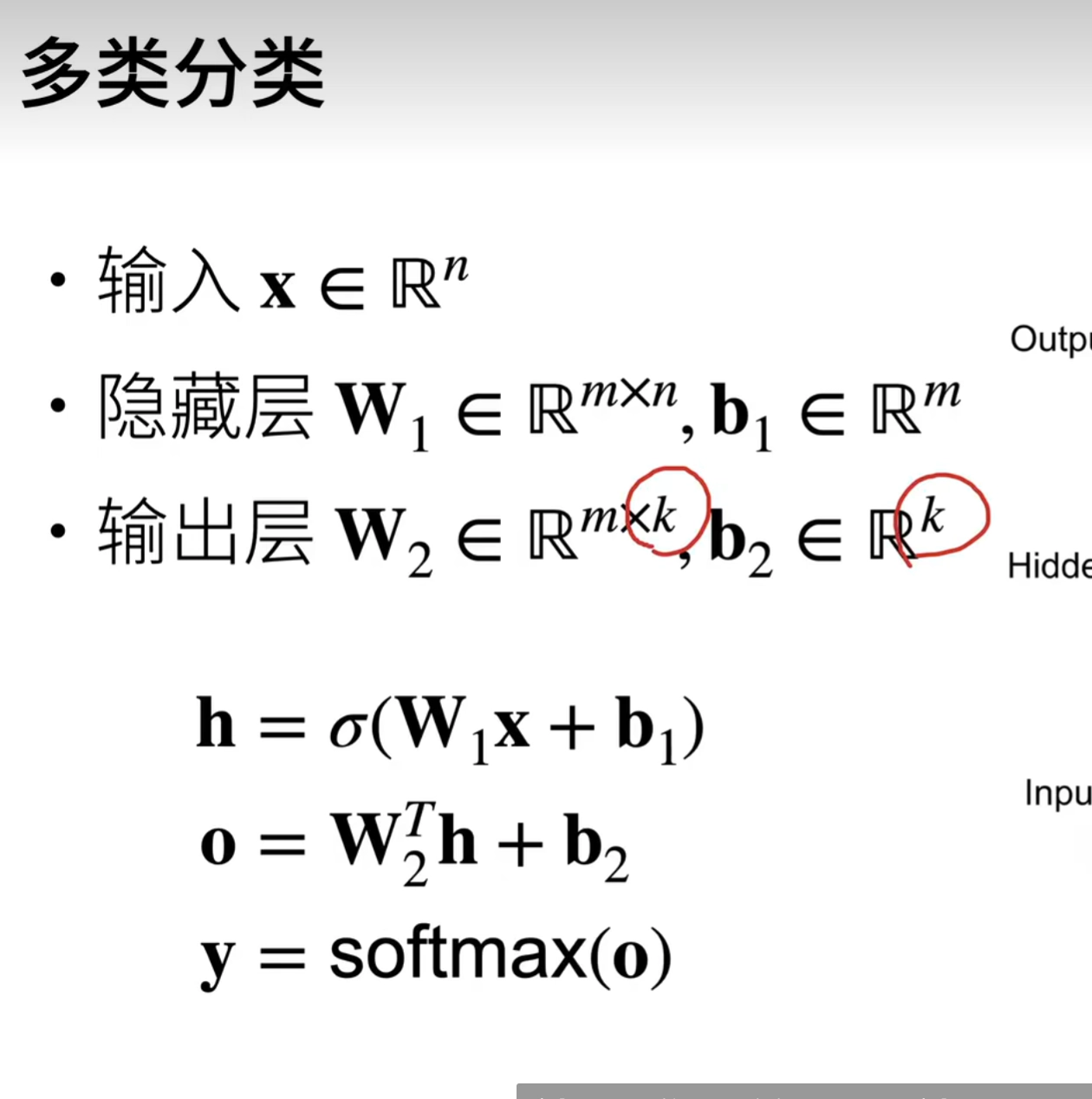
多类分类
定义:[
](https://img2024.cnblogs.com/blog/3517150/202505/3517150-20250520231438876-1966202942.png)
[
](https://img2024.cnblogs.com/blog/3517150/202505/3517150-20250520231438822-902829240.png)
总结
·多层感知机使用隐藏层和激活函数来得到非线性模型
·常用激活函数是Sigmoid,Tanh,ReLU
·使用Softmax来处理多类分类
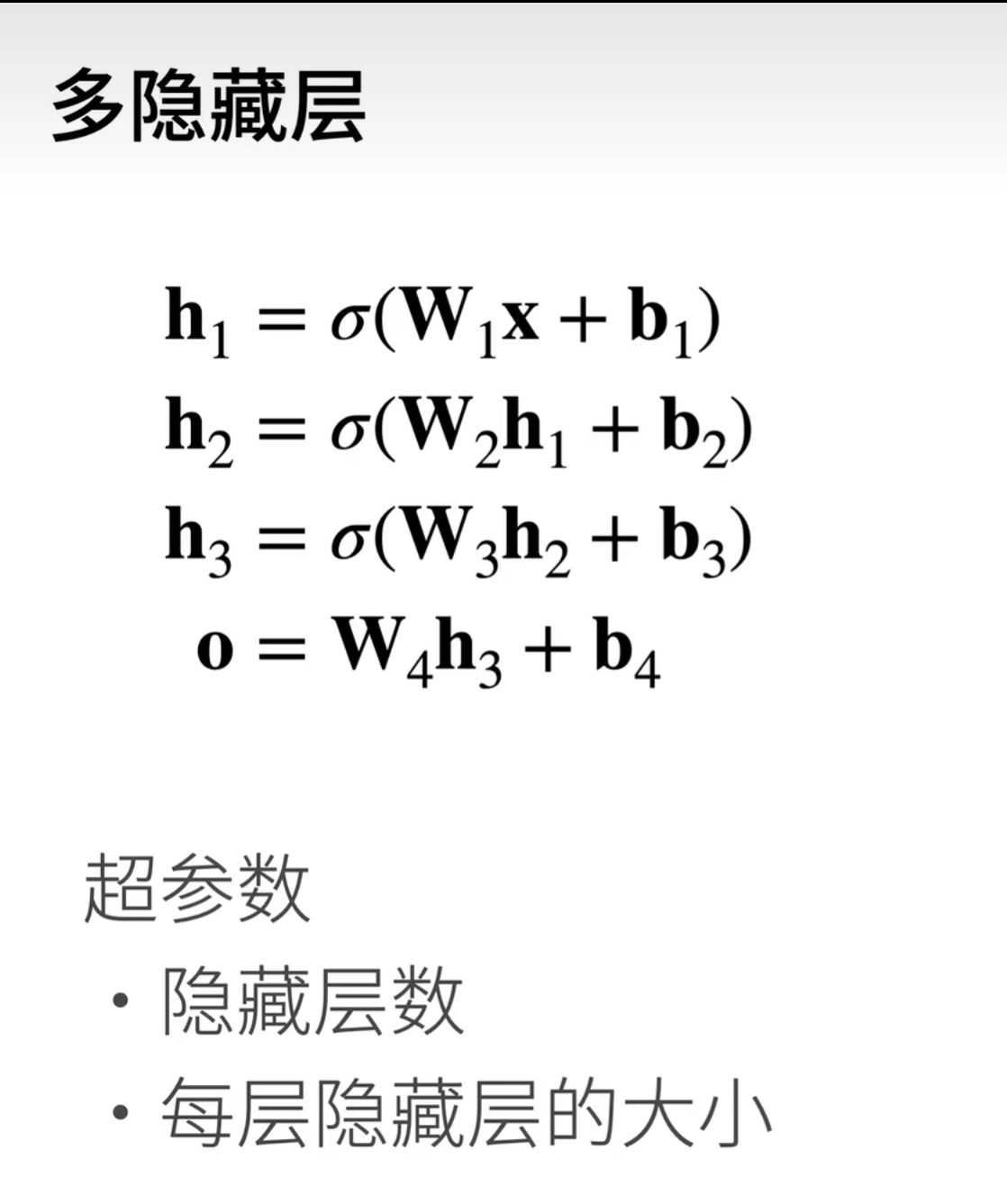
·超参数为隐藏层数,和各个隐藏层大小
In [2]:
# 多层感知机的从零开始实现
batcch_size = 256
train_iter, test_iter = d2l.load_data_fashion_mnist(batch_size=batcch_size)
In [3]:
# 实现一个具有单隐藏层的多层感知机,它包含256个隐藏单元
import torch.nn as nn
num_inputs = 784
num_outputs = 10
num_hiddens1 = 256
W1=nn.Parameter(torch.randn(num_inputs, num_hiddens1, requires_grad=True) * 0.01)
b1=nn.Parameter(torch.zeros(num_hiddens1, requires_grad=True))
W2=nn.Parameter(torch.randn(num_hiddens1, num_outputs, requires_grad=True) * 0.01)
b2=nn.Parameter(torch.zeros(num_outputs, requires_grad=True))
params=[W1,b1,W2,b2]
In [4]:
# 实现ReLU激活函数
def relu(X):
    a = torch.zeros_like(X)
    return torch.max(X, a)
In [5]:
# 实现模型
def net(X):
    X=X.reshape((-1, num_inputs)) # 将X展平
    H = relu(X @ W1 + b1) # 第一层全连接层
    return (H @ W2 + b2) # 第二层全连接层
loss=nn.CrossEntropyLoss() # 交叉熵损失函数
In [35]:
# 以前的d2l自带的代码,运行使用
def accuracy(y_hat, y):  #@save
    """计算预测正确的数量"""
    if len(y_hat.shape) > 1 and y_hat.shape[1] > 1:
        y_hat = y_hat.argmax(axis=1)
    cmp = y_hat.type(y.dtype) == y
    return float(cmp.type(y.dtype).sum())
class Accumulator:  #@save
    """在n个变量上累加"""
    def __init__(self, n):
        self.data = [0.0] * n

    def add(self, *args):
        self.data = [a + float(b) for a, b in zip(self.data, args)]

    def reset(self):
        self.data = [0.0] * len(self.data)

    def __getitem__(self, idx):
        return self.data[idx]
from IPython import display
def evaluate_accuracy(net, data_iter):  #@save
    """计算在指定数据集上模型的精度"""
    if isinstance(net, torch.nn.Module):
        net.eval()  # 将模型设置为评估模式
    metric = Accumulator(2)  # 正确预测数、预测总数
    with torch.no_grad():
        for X, y in data_iter:
            metric.add(accuracy(net(X), y), y.numel())
    return metric[0] / metric[1]
def train_epoch_ch3(net, train_iter, loss, updater):  #@save
    """训练模型一个迭代周期(定义见第3章)"""
    # 将模型设置为训练模式
    if isinstance(net, torch.nn.Module):
        net.train()
    # 训练损失总和、训练准确度总和、样本数
    metric = Accumulator(3)
    for X, y in train_iter:
        # 计算梯度并更新参数
        y_hat = net(X)
        l = loss(y_hat, y)
        if isinstance(updater, torch.optim.Optimizer):
            # 使用PyTorch内置的优化器和损失函数
            updater.zero_grad()
            l.mean().backward()
            updater.step()
        else:
            # 使用定制的优化器和损失函数
            l.sum().backward()
            updater(X.shape[0])
        metric.add(float(l.sum()), accuracy(y_hat, y), y.numel())
    # 返回训练损失和训练精度
    return metric[0] / metric[2], metric[1] / metric[2]
In [38]:
num_epochs = 10
lr = 0.01
updater = torch.optim.SGD(params, lr=lr) # 随机梯度下降优化器
# 训练模型
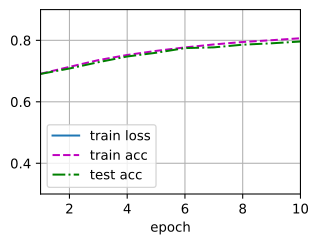
train_ch3(net, train_iter, test_iter, loss, num_epochs, updater) # 训练模型
[
](https://img2024.cnblogs.com/blog/3517150/202505/3517150-20250520231438646-714527379.svg)
In [ ]:
# softmax回归的简洁实现(https://zh.d2l.ai/chapter_linear-networks/softmax-regression-concise.html)
import torch
from torch import nn
from d2l import torch as d2l

batch_size = 256
train_iter, test_iter = d2l.load_data_fashion_mnist(batch_size)
# PyTorch不会隐式地调整输入的形状。因此,
# 我们在线性层前定义了展平层(flatten),来调整网络输入的形状
net = nn.Sequential(nn.Flatten(), nn.Linear(784, 10))

def init_weights(m):
    if type(m) == nn.Linear:
        nn.init.normal_(m.weight, std=0.01)

net.apply(init_weights);
loss = nn.CrossEntropyLoss(reduction='none')
trainer = torch.optim.SGD(net.parameters(), lr=0.1)
num_epochs = 10
d2l.train_ch3(net, train_iter, test_iter, loss, num_epochs, trainer)
评论加载中…